
Charlamos con Colin H. van Eeckhout (AMENRA, CHVE) sobre su nuevo proyecto, De Mannen Broeders
Hemos tenido la grandísima oportunidad de tener una conversación altamente interesante con Colin H. van Eeckhout, vocalista de AMENRA/CHVE a raíz de su nuevo proyecto, De Mannen Broeders, una colaboración con el artista de folk Tonnie ‘Broeder’ Dieleman.
El resultado de su trabajo conjunto es Sober Maal, un álbum con una carga profundísimamente emocional de siete temas grabado en solo cinco días en una iglesia del siglo XVIII, y que, como se leerá a lo largo de la entrevista, supone una conexión con el pasado, la tradición y la espiritualidad.
VERSIÓN EN ESPAÑOL
Muchas gracias por concedernos la oportunidad de tener esta entrevista, considerando que yo misma soy seguidora de tu trabajo, y para mí es un honor enorme poder hablar contigo.
Muchas gracias a vosotros por vuestro tiempo.
¿Cómo te sientes ahora que habéis lanzado este nuevo proyecto, De Mannen Broeders?
Estoy muy feliz de que finalmente haya salido. Lo grabamos hace tiempo, pero debido a nuestras agendas, a veces tenemos que esperar para sacar un disco, porque siempre hay muchas cosas en marcha. Pero estoy muy orgulloso de este álbum. Fue un viaje mágico escribirlo y grabarlo, así que me siento orgulloso de poder liberarlo y sacarlo a la luz.
Este álbum es una colaboración única y muy interesante entre tú y Tonnie Broeder Dieleman. Ambos venís de mundos muy diferentes, pero como has dicho, conectasteis casi al instante. ¿Qué os unió? ¿Cómo surgió esta colaboración?
Conocí a Tonnie y a su música a través de una entrevista. Vi algo que dijo y de inmediato conecté con lo que expresaba, con lo que era. Cuando hablaba de lo que cantaba, sentí que había una conexión, como si estuviera contando una historia similar, aunque con un estilo de música diferente.
Creo que lo primero que hice fue enviarle un correo solo para decirle: «Oye, me gusta mucho tu trabajo». Y eso fue todo. Luego, algún tiempo después, coincidimos en un festival y empezamos a hablar. Nos llevamos muy bien, y sabíamos que en algún momento íbamos a hacer algo juntos, pero no sabíamos cuándo.
Luego, se presentó la oportunidad a través de un festival en Holanda llamado Le Guess Who, donde juntaban a un músico de allí con otro de un país distinto. Fue entonces cuando, recordando nuestras conversaciones previas sobre colaborar, Tonnie se puso en contacto conmigo y me dijo algo como: «Tal vez ahora sea el momento de trabajar juntos». Así que empezamos a hacer planes, y decidimos vivir en la iglesia durante unos días, o incluso una semana, y grabar el proyecto allí.
¿Qué temas crees que destacan en este álbum, Sober Maal? ¿Cómo se relacionan estos temas con las experiencias de ambos?
Tonnie viene de una zona muy religiosa de los Países Bajos, una especie de «cinturón bíblico». Es una región muy protestante. Creció en un entorno muy marcado por la religión, donde tenía que ir a la iglesia todas las semanas hasta que tenía unos 20 años. Era básicamente su forma de vida, con sus normas y toda la comunidad siguiendo esas reglas.
Por otro lado, yo soy de Flandes, Bélgica, y me crié en un ambiente ateo. No tuve una educación religiosa, pero siempre he mantenido un interés por la fe, la religión y temas relacionados, probablemente porque no me fue impuesta. No me enseñaron a odiarla, así que nunca desarrollé una aversión hacia ella.
A lo largo de mi vida, cuando atravesé momentos difíciles, sentí la necesidad de buscar algo, de encontrar una conexión. Iba a la iglesia, encendía una vela, o hablaba a algo, aunque no sabía exactamente a qué. Entonces, me di cuenta de que tenía una necesidad de algo en lo que creer, en lo que confiar. De ahí nació mi interés por la religión. Y descubrí que tal vez hoy en día hay una necesidad o una falta de esa conexión para algunas personas.
Fue fascinante cómo, a pesar de nuestros orígenes diferentes, nos unimos para cuestionar la religión, su poder, la vida en general. Empezamos a leer libros antiguos, sermones de pastores, biblias y salmos, buscando fragmentos que nos hablaran y dándoles un nuevo significado a la luz de nuestros propios antecedentes.
Una de las canciones es una oda a una madre. Para mí, representa a mi madre, pero para otra persona, podría ser la continuidad de la vida humana. Todos venimos de dos padres, todos tenemos nuestras relaciones y añoranzas. Esa conexión humana es algo que nos une a todos. De hecho, esta oda proviene de antiguos manuscritos, en los que la Virgen María es considerada la madre por excelencia.
¿Os habéis basado en vuestras experiencias personales para escribir las letras, o es más general?
Algunas letras surgieron sobre la marcha. Por ejemplo, en mis otros proyectos, suelo escribir durante todo el año, creando cosas que luego voy uniendo cuando empieza a formarse la música.
Pero en este caso, el calendario fue muy ajustado, así que escribimos según lo que sentíamos o lo que creíamos que necesitábamos. Muchas de las letras tratan sobre la unión y la conexión, porque estábamos todos reunidos en esa iglesia. Yo tenía a Tim conmigo, que grabó el álbum, y Tonnie tenía a su amigo que tocaba el órgano y el piano. Nos juntamos y conectamos instantáneamente, como una familia que surgió de manera espontánea. Empezamos a tratarnos como hermanos, de hecho, la traducción literal del nombre de la banda es «los hermanos hombres».
Durante ese tiempo, en la iglesia, nos cuestionamos la vida, y al final, llegamos a la conclusión de que todo tiene un final, y que cada uno debe seguir su camino. Esas son algunas de las reflexiones que plasmamos en las letras. Por eso, algunos poemas y letras fueron escritos sobre la marcha, mientras que otros provienen de antiguos himnos o textos de pastores del siglo XVIII con los que comenzamos a trabajar.
He leído en el dossier de prensa que tanto tú como Tonnie perdisteis a vuestros padres recientemente; ¿cómo crees que este proyecto os ha ayudado en el proceso de duelo?
Ambos perdimos a nuestros padres hace tiempo: yo hace casi 20 años, y Tonnie probablemente hace 10 o 15 años. Así que ha pasado mucho tiempo. Pero trabajar en este proyecto ha despertado definitivamente ese sentimiento de añoranza, esa sensación de echar de menos a alguien. Para mí, la canción es una especie de oda a una madre y me hace pensar en la mía, que está envejeciendo. Soy hijo único, así que empiezo a pensar en el hecho de que no estará aquí para siempre.
Es casi como si la música te obligara a enfrentarte a estos pensamientos, sobre todo cuando estás inmerso en ella todos los días. Estoy seguro de que a Tonnie también le hace reflexionar sobre su propia madre. Pero también puede aportar un sentimiento de gratitud, al poder hacer algo juntos con personas a las que quieres, en el momento.
El proceso de hacer música, especialmente con alguien cercano, te ayuda a entenderte mejor a ti mismo y a las personas que has perdido. Es una forma de posicionarte, de situar tu espíritu y tu mente en la vida, y de reflexionar sobre dónde estás, lo que te facilita el manejo de la situación. Te ayuda a conocerte mejor y esa es la parte positiva.
Con De Mannen Broeders, el sonido es mucho más sutil en comparación con tu trabajo en AMENRA. En AMENRA, a menudo hay una sensación de ira y rabia, pero con este proyecto, el sonido parece más tranquilo, más contenido. ¿A qué se debe este cambio?
Creo que cada proyecto tiene su propia historia que contar. Muchos de los temas subyacentes pueden ser similares en todos nuestros proyectos, pero la forma en que se desarrolla la música define el sonido.
Por ejemplo, en AMENRA tenemos momentos más pesados, pero también partes más tranquilas e íntimas, como las canciones acústicas. Es importante explorar todo el espectro de emociones, desde los momentos intensos hasta los más pequeños y tranquilos.
Nunca es una decisión consciente decir: «Quiero hacer un grupo que suene más heavy» o «Quiero hacer un proyecto acústico». Se trata más bien de lo que crece orgánicamente a partir de la música que creamos juntos. Al final, lo que intentamos es contar un capítulo dentro de una historia más grande. Creo que es mucho más interesante no limitarse a un solo estilo; me gusta tener una paleta de energías amplia en la que habitar.
¿Puedes hablarme de la portada del álbum?
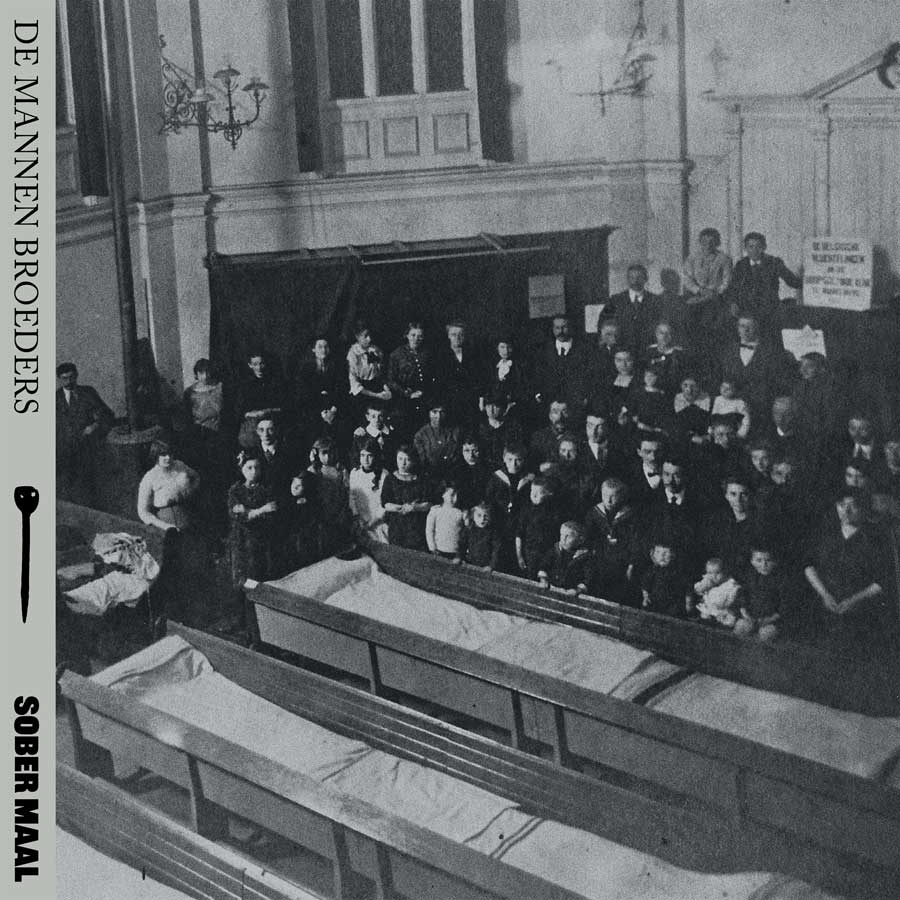
Sí, es una historia interesante. Mientras estábamos grabando en la iglesia, había muchos momentos de silencio, esperando a que alguien o algo estuviera listo. Caminaba por allí y, en un momento, me fijé en unas fotos pegadas a la pared, en un banco de la iglesia. Lo que más me llamó la atención fueron los pies de foto debajo de ellas.
Una de las fotos mostraba a refugiados flamencos, belgas de la Primera Guerra Mundial.
En aquella época, muchos belgas tuvieron que huir, y esa misma iglesia había albergado a un gran grupo de ellos. Utilizaban los bancos como camas, apilados unos contra otros, con colchones encima. Había fotos de niños entre ellos, y me impactó mucho verlas.
Esa conexión la sentimos especialmente fuerte ahora, con las crisis de refugiados en todo el mundo y con cómo el período del COVID nos dejó a muchos de nosotros sintiéndonos aislados. En cierto modo, nosotros mismos nos sentíamos como refugiados grabando en esa iglesia.
No era nuestra religión, pero nos acogieron bien. Bebimos su café, nos calentamos con su calor y nos permitieron contar nuestra historia en su espacio.
Ese espíritu hospitalario se sentía profundamente en las paredes de la iglesia. Cuando vi esa foto de los refugiados, todo encajó: el pasado y el presente, la experiencia compartida del desplazamiento y la conexión.
¿Hay alguna razón por la que elegisteis esta iglesia en particular, la Doopsgezinde Kerk?
Sí, la iglesia en la que grabamos está en la ciudad donde Tonnie vive ahora, por lo que estaba muy cerca de su casa. Además, tiene una buena relación con el pastor de esa iglesia, lo que hizo posible que pudiéramos utilizarla para la grabación.
Fue justo después de la pandemia de COVID, cuando no era posible hacer reuniones grandes, por lo que la iglesia estaba vacía. El párroco estuvo encantado de dejarnos usar el espacio, y me sentí muy bien usándolo de esa manera.
En todas las iglesias en las que hemos grabado siempre ha existido una conexión personal. La iglesia donde grabamos nuestro primer video estaba en el pueblo donde Tonnie nació y creció. El segundo video lo grabamos en una iglesia cercana a mi casa, en Gante (Bélgica). Y, por supuesto, el último videoclip fue grabado en esta iglesia.
Es interesante porque, aunque las iglesias son todas diferentes en cuanto a sus prácticas religiosas y su historia—catolicismo, protestantismo, diferentes ramas del cristianismo—todas comparten un mismo propósito: son espacios de reflexión, donde la gente busca respuestas a preguntas que no pueden resolver por sí mismos. Eso fue lo más bonito de todo: reunir todos esos lugares y experiencias diferentes, visitar distintos países e iglesias, pero encontrar un hilo conductor en la búsqueda de sentido.
¿Crees que estos espacios juegan algún tipo de papel?
Sí, totalmente. Nos inspiraron mucho y, en nuestro caso, se puede escuchar y sentir el espacio en el álbum.
Queríamos transmitir esa sensación de estar en la sala, de estar en la iglesia. Cuando enviamos la mezcla a Australia, a un amigo nuestro, al principio él no sabía que queríamos ese efecto. Así que eliminó todos los sonidos característicos del lugar: las páginas pasando, los pasos, las puertas chirriando… y nos mandó la versión. Pero cuando la escuchamos, nos dimos cuenta de que no era lo que buscábamos. Necesitábamos esos sonidos, necesitábamos el espacio. Queríamos que el público, o el oyente, se sintiera como si estuviera allí, en esa habitación. Porque, no sé por qué, pero ese ambiente le da más valor a la música, casi como si fuera un documento. Sientes que está registrado en un momento y lugar muy específicos. Esos espacios, esas habitaciones, crean una atmósfera única. Cuando estás allí, te afecta de una manera particular. Hay una especie de peso sobre tus hombros, por la propia naturaleza del lugar. Te exige cierto respeto, te obliga al silencio. No puedes hacer cualquier cosa en un lugar así, no puedes comportarte de una forma descontrolada.
Por supuesto, porque es algo sagrado.
Sí, requiere respeto. Y creo que la situación de las iglesias aquí en Bélgica, es que muchas de ellas ya no se utilizan. Están vacías, muchas veces.
Eso no pasa tanto en España.
Sí, España es mucho más religiosa. En Holanda también siguen utilizándose, pero cada vez menos. Ya no se llenan a menos que se organice algo cultural o algún evento que atraiga a la gente.
Creo que el efecto que tienen ahora las iglesias es muy interesante. Me refiero a que tienes estos enormes edificios en casi cada pueblo de Bélgica que ya no cumplen una función religiosa, pero están tan profundamente arraigados en la cultura que es difícil deshacerse de ellos. Además, su mantenimiento es muy costoso. Es algo curioso.
Mientras tanto, por ejemplo, aquí también hay una comunidad musulmana, como en todas partes. Y algunas organizaciones, en lugar de tener un edificio grande, tratar de alquilar un garaje para crear una mezquita o algo similar y poder utilizar como lugar de culto.
Es todo lo contrario.
Es todo lo contrario. Aún existen lugares de culto. Y para mí, es una dinámica bastante extraña, ¿sabes? Es como si esos edificios, que en algún momento fueron construidos para ser lugares de culto, ahora estén vacíos, pero al mismo tiempo se están construyendo nuevos lugares. Para mí, todo está conectado. Veo diferentes culturas, pero con una intención común o un mismo propósito. Es interesante trabajar con eso y reflexionar sobre ello.
También habéis utilizado instrumentos diferentes, como el banjo, la zanfona… ¿Qué os inspiró a elegir estos instrumentos?
De hecho, yo tocaba la zanfona. Llevábamos nuestros propios instrumentos, y en la iglesia ya había un piano, un órgano y algunos instrumentos de percusión. No pensamos demasiado de antemano sobre qué instrumentos usar, simplemente llevamos lo que teníamos y, una vez allí, cogimos lo que nos parecía adecuado en el momento. A lo largo de los años, escuchar mucha música diversa probablemente nos hizo inclinarnos por estos instrumentos, porque tenían sentido para nosotros en ese contexto.
Habéis mencionado haber incluido elementos como un poema entre un sacerdote católico y otro protestante. ¿Cómo estructurasteis el álbum? ¿Seguisteis algún orden específico o simplemente lo lanzasteis como venía?
Muchas de las decisiones fueron tomadas de forma muy orgánica e instintiva. Se nota según se va desarrollando. Primero tienes el poema, luego empieza el banjo y termina en la canción «Grafschrift»… Es como una evolución natural, pasando de la voz hablada al canto. Creo que todo está muy bien equilibrado; fluye de manera natural de un elemento al siguiente.
Por ejemplo, tenemos esas largas y pesadas canciones tipo drone que contrastan con los cantos más ligeros, folky y casi de cantautor. Hay cierta fluidez en la estructura. Los poemas que usamos al final sirven de conclusión definitiva, luego hacemos una transición a la repetición de la canción Sober Maal que grabamos en un pequeño MIDI de cuatro pistas. Dejamos que suene, luego abandonamos la sala. No escuchas esta parte, pero puedes sentir que es un ritual – algo así como una trayectoria a lo largo del proceso de creación.
Todo cuadró tan bien que incluso dejamos algunas grabaciones sin incluir porque no encajaban cohesivamente con la fluidez que queríamos. Es como si todo hubiese quedado completo así como estaba.
Has mencionado la repetición y el deseo de crear un ritual. También has hablado de espiritualidad. ¿Qué relación tiene el concepto de ritual con Sober Maal?
Mucho de lo que hacemos, especialmente en el tipo de música que hacemos, tiene un elemento ritual. Pero no necesariamente en el sentido tradicional de un ritual, como quemar algo o realizar un acto litúrgico. No se trata de eso. El ritual también puede ser simplemente tomarse el tiempo, estar presentes, sentarse juntos, quizás en círculo, y hablar sobre lo que vamos a hacer.
En la música, hay mucha repetición en los propios movimientos. Por ejemplo, cuando toco la zanfona, estoy continuamente girándola. Esa repetición te permite perderte en la música. Son estas pequeñas acciones, casi meditativas, las que crean el ritual. Es difícil describir exactamente qué son los rituales; es algo que simplemente sientes cuando estás en el lugar.
¿Son los rituales importantes para ti?
No es algo increíblemente importante, pero sí veo la importancia de tomarse el tiempo para prepararse. «Ritual» es una palabra bonita para describir ese proceso.
Por ejemplo, a mí me encanta tener estructura, control y supervisión de lo que hago. Prepararse para un concierto o una sesión de grabación tiene su propio ritual. Preparas tus cosas, tus instrumentos, compruebas los cables, los enrollas en silencio… todo eso forma parte de la preparación para lo que vas a hacer.
Es un poco como lo que hace un cura antes de una misa. Él prepara todo, se asegura de que todo lo que necesita esté cerca y ensaya sus movimientos. Hacer música es parecido, sobre todo cuando se graba en directo. Cada movimiento que haces es audible, por lo que piensas cuidadosamente en el orden de esos movimientos.
Así que, en cierto modo, es como un ritual para entrar en un espacio mental o en un estado de libertad espiritual. Se trata de crear el espacio mental y emocional necesario para contar una historia universal, o cualquier otra historia que quieras compartir.
¿Tienes algún ritual específico para vuestras actuaciones? No quiero referirme específicamente a AMENRA, pero…
La verdad es que no. La gente suele imaginar que nos sentamos en círculo a oscuras con una vela en el centro antes de un espectáculo, pero no es así. Cada uno tiene su manera de prepararse.
Personalmente, escucho música, doy una vuelta y me aseguro de que todo esté en su lugar, y de que yo tenga mi micrófono preparado. Lo dejo todo listo y creo un pequeño espacio controlado para mí en el escenario.
Lo mismo pasa con los demás músicos. Cuando toco solo, sobre todo con mi último disco, llevo muchas piedras conmigo. Hago sonidos con ellas y, de alguna manera, me ayudan a aislarme del público. El público me estresa; tengo miedo escénico y temor al fracaso. Así que las piedras forman parte de mi proceso, me concentro en ellas para poder desconectarme del público y centrarme en lo que estoy haciendo.
¿Es por eso por lo que tiendes a dar la espalda al público?
Cuando tocaba en otro grupo, me ponía de cara al público. Pero en AMENRA, tenía sentido que nos diéramos la vuelta. No queríamos centrarnos demasiado en una sola persona. Construimos esto como un grupo, juntos, y estar en la sombra permite que la atención se desplace. El público no siempre necesita un punto focal claro.
Hablemos de folclore y tradición, parece que juegan un papel importante en este proyecto. ¿Cómo refleja el álbum las tradiciones y el folclore de tu tierra natal y el de Tonnie?
Sí, en gran medida se trata de explorar nuestra cultura y patrimonio. En Bélgica no conocemos demasiado a fondo nuestro propio legado, pero tanto Tonnie como yo disfrutamos ir a mercadillos, hojear libros antiguos y coleccionar herramientas viejas, clavos oxidados o cualquier cosa que parezca haber tenido una historia.
Este enfoque también influye en nuestro material gráfico. El álbum viene con un pequeño libro que incluye escaneos de algunos de los objetos que usamos, como páginas de libros antiguos, clavos que hizo el abuelo de Tonnie o incluso una cucharilla que encontramos en la iglesia donde grabamos. Este tipo de objetos son los que coleccionamos: cosas que tienen un aura o una historia que contar. Pueden estar en nuestras casas durante mucho tiempo sin un propósito claro, pero al final siempre encuentran su lugar.
A veces, estos objetos inspiran una letra, forman parte de una obra de arte o incluso te dan una frase que estabas buscando. Puede que no sepas por qué tomaste ese objeto en particular, pero en algún momento de tu vida tiene una función. Tonnie y yo compartimos esta tendencia a reunir y conservar objetos con significado. Cuando nos encontramos, traemos toda esa «vieja basura» y comenzamos a hablar sobre ella. Ese intercambio despertó la inspiración y, de repente, surgió una historia compartida. No era solo mi historia ni la de él, sino nuestra historia. Buscamos cosas que tengan un significado, una historia que contar, y con el tiempo nos ayudan a guiar el proceso creativo.
¿Crees que es importante preservar ciertas tradiciones o el folclore en nuestra vida moderna? ¿Nos ayudan a mantenernos conectados con el pasado de alguna manera?
No estoy seguro de si necesitamos preservar las tradiciones y el folclore, pero sí creo que existe un impulso inherente a hacerlo. Se siente esa conexión, esa sensación de que la historia se repite.
Lo que era importante para un ser humano hace 100 o 200 años sigue siendo, en el fondo, importante para nosotros. Claro que ahora vivimos de una manera diferente y vemos el mundo con otros ojos, pero las cuestiones fundamentales de la existencia humana siguen siendo las mismas.
De alguna forma, todos estamos en el mismo viaje que los que nos precedieron. Por eso resulta tan significativo y fascinante leer sobre sus vidas y decisiones. Por ejemplo, en Grafschrift se cuenta la historia de alguien que prefirió la amistad a las normas de su orden religiosa, que desafió a la Iglesia para honrar a una persona de otra fe. Fue algo radical, casi punk, en esa época.
Eso resalta la importancia atemporal de elegir el amor y la amistad por encima de las estructuras impuestas o la autoridad. Es lo que hace que estas historias sean tan convincentes y relevantes, incluso hoy en día. Es universal, sigue siendo aplicable. Eso es lo que buscamos: la esencia de un texto, intentando interpretar lo que significa en el presente. Esa es la parte importante.
Así que, aunque no estoy seguro de que sea absolutamente necesario mantener vivas todas las tradiciones, sí creo que es importante encontrar la belleza en ellas.
Incluso puedes cambiar las tradiciones o inventar otras nuevas, como un nuevo ritual o práctica, siempre que mantengas la esencia o la moraleja de lo que quieres transmitir. Se trata de mantener vivo el espíritu, ya sea a través de la tradición, el ritual o algo completamente nuevo. Por eso es tan interesante trabajar con ello.
¿Piensas llevar este proyecto al directo?
Sí, haremos algunos conciertos. Ya hemos anunciado que estaremos en Roadburn en 2025. Vamos a tocar allí y también haremos algunos conciertos selectos, pero no tocaremos mucho. Aunque si vamos a algún lugar donde haya un órgano, definitivamente será de ayuda.
¿Y piensas hacer algo especial con el montaje del espectáculo, como una escenografía o ambientación específica?
Ya hemos tocado una vez en una iglesia y otra en una sala pequeña. Tendremos que adaptarnos un poco al lugar, dependiendo de qué instrumentos permita el espacio, pero sí, sin duda haremos algunos conciertos en directo. El próximo año tendremos algunos meses en los que podremos tocar, así que también habrá más conciertos.
Respecto a la Church of Ra, ¿crees que este proyecto encaja en esa filosofía o vertiente espiritual de las bandas vinculadas a ella?
Creo que sí. Nunca decimos explícitamente «esto forma parte de la Church of Ra», pero mucho de lo que hacemos cae naturalmente dentro de ese ámbito. Tiene sentido porque la Church of Ra es esencialmente la «iglesia de la vida», por lo que se trata de contar historias, algo que encaja perfectamente con lo que hacemos. Así que sí, definitivamente encaja.
En otro orden de cosas, ¿juega el idioma que utilizas un papel importante en tu proceso creativo? Esto ya lo haces con AMENRA, porque tengo entendido que prefieres cantar en tu lengua materna. ¿Ocurre lo mismo con De Mannen Broeders?
Sí, es un poco como una fase. Llevo un tiempo leyendo mucho en mi lengua materna y, naturalmente, eso se traslada a la música. Empezamos a versionar canciones belgas en AMENRA, y me di cuenta de lo poderoso que es el idioma para transmitir emociones. Me sentía más cómodo expresándome en mi propio idioma que en inglés, así que se convirtió en una herramienta que prefería.
A medida que exploraba esto, comencé a escribir más en mi lengua materna, y se fue convirtiendo en una opción más natural para mí. Pero estoy seguro de que en el futuro volveré a cambiar. Si empiezo a leer más libros en inglés o a ver películas en inglés, o incluso si hablo más con amigos angloparlantes, puede que eso me inspire a volver al inglés o a algo completamente distinto. Va fluyendo.
Lo curioso es que Tonnie y yo tenemos dialectos muy parecidos, aunque venimos de países diferentes. Fue divertido trabajar con eso, compartiendo el mismo idioma pero con pequeñas variaciones. Bromeábamos sobre ciertas palabras, como cuando él decía «respirar» de una manera diferente o cómo ambos usábamos la palabra «increíble» de forma parecida. Es un lenguaje compartido con peculiaridades personales, lo que lo convierte en una interesante herramienta de inspiración.
¿Te preocupa que parte de tu público no entienda la letra?
Intento traducir las letras siempre que puedo, normalmente con la ayuda de personas que sepan traducir poesía. Luego junto las traducciones, para que los oyentes puedan hacerse una idea de lo que estamos transmitiendo, aunque no capten todas las sutilezas o los detalles más intrincados del lenguaje.
Pero es curioso porque hace poco hablé con alguien de Estados Unidos que estaba escuchando el disco, y me dijo que le encantaba, aunque no entendiera ni una palabra. Es increíble cómo la música puede conectarnos a un nivel tan profundo, incluso sin entender la letra. El sonido por sí solo puede desencadenar emociones o llevar a alguien a un lugar determinado. En ese sentido, la música trasciende el lenguaje.
Lo entiendo perfectamente. Recuerdo la primera vez que escuché el álbum: no tenía ni idea de la letra, pero sentía la carga emocional. Es fascinante cómo la música puede transmitir todo eso sin necesidad de entender la letra.
Sí, es algo raro, pero me encanta. Ese es el poder de la música. Puede conectar contigo emocionalmente de maneras imposibles de explicar. No importa si entiendes el idioma o no. Se trata del sentimiento que crea la música, y eso es lo que la hace tan especial. Nunca sabrás realmente por qué conecta, pero cuando lo hace, es poderoso.
Es un lenguaje universal.
Exactamente. Es un lenguaje emocional. Puede elevar tu espíritu o hundirte. Te ayuda a encontrar los sentimientos adecuados o a liberar emociones que ni siquiera sabías que tenías. Es increíble lo que puede hacer.
Por último, ¿qué esperas que se lleve la gente que escuche el disco?
Es una pregunta difícil. La verdad es que no lo sé. Espero que conecten con la historia que estamos contando, que sientan que estuvieron allí con nosotros en la iglesia, compartiendo ese momento. Muchos de los poemas del álbum tratan sobre eso.
Nació de la soledad, pero también habla de la unión. Quiero que la gente sienta ese momento compartido de conexión, incluso a través de la distancia o el tiempo. Se trata de ese momento fugaz y hermoso en el que todo confluye. Eso es lo que espero que la gente se lleve: esa sensación de unión, aunque sea solo por un breve instante.
Pues muchísimas gracias de nuevo por tu tiempo. Espero que vuelvas pronto a España, ya sea con este proyecto o con cualquier otro.
Lo haré. Y será el año que viene (2025), seguro. Gracias.
ENGLISH VERSION
Thank you so much for giving us the opportunity to do this interview, since I myself I’m a huge fan of your work. So thank you so much.
Thank you for your time.
How are you feeling now that you released your new project, De Mannen Broeders?
I’m happy it’s out there. Yeah. We recorded it a while ago, you know, but due to our agendas, we must wait sometimes to release an album, because there’s so much things going on. But I’m really proud of this album. It was a magical journey to write and to record that one. So, yeah, I was proud to be able to let it free, get it in the open.
Okay. So this album is such an interesting, such unique collaboration between you and Tonnie Broeder Dileman. Because both of you, you come from really different worlds, but as you said, like, you connected almost instantly. So what drew you together? How did this collaboration took shape?
I first heard about Tonnie and his music through an interview. I saw an interview with him and I immediately had a connection, what he was saying and what he was. When he was speaking about his music and, and what he sung about, I felt the connection with him and I really had the feeling that I was doing the same thing, or we were telling the same story in a way, but in a different style of music.
And I think I immediately mailed him just to say, hey, I really like your work. Something like that. And that was that. And then sometime later, we played together on a festival and we started talking and we got along well. We kind of knew that we were going to do something together at some point, but we didn’t really know when. But then we got the opportunity because through a festival called Le Guess Who from Holland, they had a project where they put a dutch musician together with a musician from another country. And then, you know, he remembered that we spoke of doing something together someday. And then he contacted me and said, like, hey, maybe now is the time to work together. And that’s when we made the plans to live in the church for a couple of days, for a week, and then record the thing.
Which kind of themes, what topics do you think are most prominent in this album, Sober Maal? How do these themes relate with both your experiences?
Tonnie comes from a very religious area in Holland. It’s like the Bible belt from Holland. It’s very protestant. And they really were raised with religion, and they really had to go to church each week until they probably were almost 20 years old. That was really something to live by. It had its rules, and the whole community really lived up to those standards of the church.
Whereas I came from Flanders in Belgium, and I was raised atheist. I didn’t have any religious upbringing, but I always kept a spark of interest for faith and religion and stuff like that, because probably it wasn’t imposed on me. I never had to do it. So I wasn’t able to create an aversion towards it. I didn’t learn to hate it.
And, in my lifetime, when I went through some rougher periods, I felt that I was looking for something, you know, I was looking for connection. I went into a church and I burnt a candle, or I was speaking to something that I didn’t know what I was talking to.
So, I realized that I had this certain need for something to believe in or something to be able to put my trust in. And that’s where my interest in religion got sparked. And I realized that there’s maybe a necessity or a lack of it in some people’s lives these days. So, it was kind of interesting for us to come together with our two different backgrounds, questioning religion and questioning life and questioning the power of religion. And then we started going through old books and old sermons of old pastors, bibles and psalms, and we kind of looked for pieces that spoke to us, and we kind of gave it a new meaning, with our background.
One of the songs is an ode to a mother. For me, it’s my mother, and for someone else, that’s the continuity in a human life. We all come from two parents, and we all have our relationship and or longing and whatever. So, it always connects. That connects to every human. But, I mean, if you take it literally, it comes from old manuscripts, and it’s the Virgin Mary that is the mother. But, I mean, you strip it down to the core of the thing. It’s an ode to a mother.
So did you use your personal experiences to write the lyrics or is it more general?
Some lyrics are really written very much on the spot. For example, for my other projects, I write the whole year round. I write stuff down, and then I put it together when music is formed. But for this one, it was really a very tight timeframe in that sense, that we really, on the spot, wrote accordingly to what we felt or what we think it needed.
So, probably, a lot of the lyrics and the texts are pretty much about togetherness and connection, because we really were put together in that church. I had Tim (Tim de Gieter) with me, who recorded the album, and Tonnie had his friend (Pim van de Werken) with him who played organ and piano. We put that together and we instantly connected, and it was like an instant family that was born. And we spoke about the brothers, you know, the literal translation of the band name is the men brothers.
So we did speak to each other as brothers. In that moment in that church, we questioned life, and at the end, we tell each other to that it ends now, and we each have to go our own way. Stuff like that, we wrote accordingly. So, some poems and lyrics are written on the spot, and other lyrics are of old hymns or old texts of pastors from the XVIII century and stuff like that that we’ve started working with.
I read in the press kit that you and Tonnie recently lost your parents—how do you think this album has helped in the process of grief?
We both lost our parents a while ago—me almost 20 years ago, and Tonnie probably 10 or 15 years ago. So it’s been a long time. But working on this project definitely awakened that feeling of longing, that sense of missing someone. For me, the song that’s an ode a mother makes me think about my own mother, who’s growing older. I’m an only child, so I start thinking about how she won’t be around forever.
It’s almost like the music forces you to fall into these thoughts, especially when you are not immersed in it every day. For Tonnie, I’m sure it makes him think about his own mother, too. But it can also bring a sense of gratitude, being able to do something together with people you care about. The process of making music, can help you to better understand yourself and the people you’ve lost. It’s a way to position yourself, your spirit and your mind in life and reillctehere you stand, making it easier to handle. It helps you knowing yourself better and that’s the nice part.
I noticed that with De Mannen Broeders, the sound is much more subtle compared to your work with AMENRA. With AMENRA, there’s often a sense of anger and rage, but here the sound feels quieter, more contained. What led to that shift?
I think each project has its own story to tell. A lot of the underlying themes might be similar across our projects, but the way the music develops defines the sound. For example, with Amenra, we have heavier moments, but we also have the quieter, more intimate parts, like the acoustic tracks. It’s important to explore the full spectrum of emotions—both the loud, intense moments and the small, quieter ones.
It’s never a conscious decision to say, «I want to make a heavy band,» or «I want to make an acoustic project.» It’s more about what grows organically from the music we create together. The content drives the sound. I think it’s essential to not limit yourself to one style; I like having a broad palette of energies to explore.
Can you tell me about the cover of the album?
Yeah, that’s an interesting story. While we were in the church recording, there were a lot of quiet moments—waiting for someone or something to be ready. I’d walk around, and at one point, I noticed some pictures on a church bench pushed against the wall. The pictures caught my attention, especially the little captions underneath them.
One of the photos showed Flemish refugees—Belgian refugees from World War I. During that time, many Belgians had to flee, and that very church had housed a large group of them. They used the church benches as beds, pushing them together and laying mattresses on top. There were pictures of children among them, and it immediately resonated with me.
That connection felt especially strong now, with the ongoing refugee crises around the world and how the COVID period left many of us feeling isolated. In a way, we felt like refugees ourselves, recording in that church. It wasn’t our religion, but we were welcomed there. We drank their coffee, warmed ourselves by their heat, and were allowed to tell our story in their space.
That welcoming love—the spirit of hospitality—felt embedded in the walls of the building. When I saw that picture of the refugees, it brought everything together: the past and the present, the shared experience of displacement and connection. It made perfect sense for the album to carry that feeling forward.
Is there any reason why you chose this specific church, Doopsgezinde Kerk, in Middelburg?
Yeah, the church where we recorded was actually in the city where Tonnie lives now, so it was very close to home for him. He has a good relationship with the pastor of that church, which made it possible for us to use it for the recording. It was right after the COVID period, when gathering in large groups wasn’t really possible, so the church was empty. The pastor was happy to let us use the space, and it felt good to put it to use in that way.
For every church we’ve recorded in, there’s always been a personal connection. The church in Middelburg, where we recorded, is the one Tonnie lives near now. The church where we filmed our first video was in the town where he was born and raised. The second video was shot in a church close to my home in Ghent, Belgium. And then the last video clip, of course, was the actual recording in that church.
It’s interesting because while the churches are all different in terms of their religious practices and history—Catholicism, Protestantism, different segments of Christianity—they all shared the same purpose. They were spaces for reflection, where people went to search for answers to questions they couldn’t resolve on their own. That was the beautiful part of it all: bringing together all these different places and experiences, visiting different countries and churches, but finding a common thread in the pursuit of meaning.
Do you think these spaces play any kind of role?
Oh, yeah, totally. It inspired us, and in our case, you can actually hear and feel the space on the album.
We really wanted to feel the room, feel the church on the album. Because when we sent the mix to get mastered to Australia, to a friend of us in the beginning, he didn’t know we wanted to have that effect. And he really cut out all the sounds of the church, you know, all the pages turning, the footsteps, the doors squeaking. And then he sent it to us. And we were like, no, no.
You know, we need the room. We need the audience or the listener to almost feel like he or she is in that room. Because I don’t know why, but it gives it more value, it’s like it places it in time, almost like you really feel like it’s a document. It’s in a really limited time space that it’s been recorded.
Those spaces, those rooms, really put a certain atmosphere. When you’re there, you feel a certain way. You feel a certain weight on your shoulders because of that room. It demands a certain respect. It demands a certain silence of you. You know, you can’t do anything in a room like that, you, you won’t go too wild in there.
Of course, because it is sacred.
Yes, you have a certain respect for it. And I think the idea of the churches here in Belgium, most of them are not used anymore.
This doesn’t happen in Spain at all.
Yeah. Spain is way more religious. In Holland, they still are in use as well, but, they are not used anymore. They’re never full anymore unless there’s like a cultural thing being organised there or something that fills up the room.
So, I think it’s a really interesting effect that it has now on the churches. I mean, you have these huge buildings in every small village in Belgium and it doesn’t really have a function anymore, but they are too much ingrained in the culture to get rid of them. And they’re too expensive to maintain. So, it’s a really interesting thing.
Whereas, for example, you have a muslim community here as well, like, everywhere. And for example, some organisations, may rent a garage to build a mosque in or something.
It’s the opposite.
It’s the opposite. They still have places of worship. And for me it’s a really weird dynamic, you know, like the buildings that were made to be places of worship at some point in time are now empty, but new places are being built. So, for me, I see connection in everything. I see different cultures and I see the same aim or the same intent almost. And, I mean, it’s interesting to work with and to think about.
Okay. You also have chosen different instruments, such as a banjo, an hurdy gurdy… What inspired you to use these instruments?
I played the hurdy-gurdy—that was my instrument. We brought our instruments with us. There was already a piano and an organ in the church, along with some percussion instruments that were there as well. We didn’t overthink it beforehand, like deciding specifically which instruments to use. We just brought what we had, and once we got there, we grabbed whatever felt right in the moment. Over the years, listening to different music probably influenced us to gravitate toward these kinds of instruments. They just made sense to us.
You also mentioned that you have chosen different elements, such as a poem between a Catholic and a Protestant priest. How did you structure the album? Is there any specific structure of doing these things in a particular order?
A lot of the decisions were made in a very organic, instinctive way. You really feel it as it unfolds—like, you have the poem, and then the banjo starts, leading into the song «Gafschrift.» It’s like a natural evolution, where you switch seamlessly from spoken voice to singing. I think it’s really well-balanced; everything flows naturally from one element to the next.
For instance, we have these long, heavy drone songs that contrast with the lighter, folky, almost singer-songwriter hymns. There’s a certain flow to the structure. Take the ending, for example: the poems we used at the end—they’re verbatim, marking a definitive conclusion. After that, we transition into the repetition of the song “Sober Maal,” which we had recorded on a little MIDI four-track. We let it play for a while, then left the room. You don’t hear that part, but it felt like a ritual—a kind of trajectory through the writing process.
Everything tied together so well that we left out some additional recordings because they didn’t fit the cohesive flow we wanted. It all just felt complete as it was.
You mentioned repetition and wanting to create a ritual. You also talked about spirituality. How is the concept of ritual connected to Sober Maal?
A lot of what we do, especially in the kind of music we make—like the drone songs—has a ritualistic element. But it doesn’t have to be the cliché idea of a ritual, like burning something or performing a liturgical act. It’s not about that. Ritual can also just mean taking time, being present, and sitting together—maybe in a circle—talking about what we’re going to do.
In music, there’s a lot of repetition in the movements themselves. For example, when I play the hurdy-gurdy, I’m constantly turning the crank. In the drone songs, that repetition helps you lose yourself in the music. It’s these small, almost meditative actions that create the ritual. It’s hard to describe or pinpoint exactly what the rituals are—it’s just something you feel when you’re in the room.
So rituals are a big deal for you?
Not huge, but I do see the importance of taking the time to prepare yourself. Ritual is a beautiful word to describe that process. For example, I love having structure, control, and oversight. Preparing for a concert or recording session involves its own kind of ritual. You set up your instruments, check your cables, roll them up in silence—it’s all part of getting ready for what you’re about to do.
It’s a bit like what a priest does before a mass. He prepares everything, ensures what he needs is close by, and rehearses his movements. Making music is similar, especially when recording live. Every move you make is audible, so you think carefully about the order of your actions.
This preparation becomes a ritual to enter a specific headspace or spiritual freedom. It’s about creating the mental and emotional space to tell a universal story—or whatever story you’re trying to share.
Do you follow any specific rituals for your performances? I don’t want to bring up AMENRA specifically, but do you personally have a ritual for shows?
Not really. People often imagine we sit in a circle in the dark with a candle in the middle before a show, but that’s not the case. Each of us has our own way of preparing. Personally, I listen to music, walk around, and make sure everything is set up properly—like my microphone and metal tubes. I tape everything down and create a small, controlled space for myself on stage.
The same goes for the other musicians. When I play solo, especially with my latest album, I bring stones with me. I make sounds with them, and in a way, they help me isolate myself from the audience. The audience stresses me out—I have stage fright and a fear of failure. So, the stones become part of my process, and I focus on them to lock out the audience and do my thing.
Is that why you tend to turn your back to the audience?
When I used to play in another band, I’d face the audience. But with AMENRA, it made sense for us to turn away. We didn’t want too much focus on only one person. We built something together as a group, and being in the shadows allows the attention to shift. The audience doesn’t always need a clear focal point; it’s about the collective experience.
That totally makes sense. Let’s talk about folklore and tradition. They seem to play a big role in this project. How does the album reflect the traditions and folklore of your homeland, as well as Tonnie’s?
Yes, it’s very much about analyzing our culture and heritage. In Belgium, we don’t have a deep connection to or understanding of our heritage, but Tonnie and I both enjoy digging into it in our own ways. For example, we love going to flea markets, flipping through old books, and collecting old tools, rusty nails, or anything that feels like it has lived a life.
This approach also influences our artwork. The album comes with a small book that includes scans of some of the items we used, like pages from old books, nails Tonnie’s grandfather made, or even a little spoon we found in the church where we recorded. These are the kinds of objects we collect—things that carry a certain aura or story. They might sit around our houses for a long time without a clear purpose, but eventually, they find their place.
Sometimes these objects inspire a lyric, become part of an artwork, or even just spark a creative idea. It’s as if they’ve been waiting to play their role. Tonnie and I both share this tendency to gather and hold onto these meaningful items. When we came together, we brought all this “old crap” and started talking about it. That exchange sparked inspiration, and suddenly, a shared story emerged. It wasn’t just my story or his—it became our story.
We seek out things that carry meaning, and in time, they help guide the creative process.
Do you think it’s important to preserve certain traditions or folklore in our modern lives? Do they help us stay connected to the past in some way?
I’m not sure if we need to preserve traditions and folklore, but I do think there’s an inherent urge to do so. You feel this connection, this sense that history repeats itself. What was important to a human 100 or 200 years ago is, at its core, still important to us today. Sure, we live differently now and view the world through a different lens, but the fundamental questions of human existence remain the same.
In a way, we’re all on the same journey as those who came before us, decades ago. That’s why it’s meaningful—and fascinating—they tell things about their lives and choices. For example, in Grafschrift, there’s the story of someone who chose friendship over the rules of their religious order. They defied the church they lived under to honor a person of a different faith. That was a radical, almost punk thing to do at the time.
It highlights the timeless importance of choosing love and friendship over imposed structures or authority. That’s what makes these stories so compelling and relevant, even today. That’s universal. It can still be applied today. That’s what we look for, and we try to interpret what it means in the present. That’s the important part. So, while I’m not sure if it’s absolutely necessary to keep every tradition alive, I do think it’s important to find the beauty in them.
You can even change traditions or invent new ones—a new ritual or practice, as long as you preserve the core essence or moral of what you want to pass on. It’s about keeping the spirit alive, whether that’s through tradition, ritual, or something entirely new. That’s what makes it so interesting to work with.
Do you plan to take this project live, or will it stay more of an intimate studio endeavor?
Yeah, we will be playing some shows. We just announced Roadburn for 2025. We’re going to play there, and we’ll do a few select shows, but we’re not going to play a lot. If you have an organ, it definitely helps, you know?
So, do you plan to do anything special with the show setup, like a specific stage or ambiance?
We’ve already played once in a church and once in a small room. We’ll have to adapt a bit depending on the venue—specifically what instruments the space can handle—but yes, we’ll definitely be doing some live shows, for sure. We have a few months next year where we can play, so we’ll be doing some shows as well.
And regarding the Church of Ra, do you think this project fits into that philosophy or spiritual side of the bands connected to it?
I think it does, yeah. We never explicitly say «this is part of the Church of Ra,» but a lot of what we do naturally falls into that realm. It makes sense because the Church of Ra is essentially the «church of life,» so it’s about telling stories, which aligns with what we’re doing here. So yeah, it definitely fits.
On a different note, does the language you use play a significant role in your creative process? I’ve seen in other interviews that you’ve sometimes switched languages in AMENRA and it seems like you prefer singing in your native language. Is that the case with De Mannen Broeders as well?
Yeah, it’s a bit like a phase. For a while, I’ve been reading a lot in my native language, and naturally, that spills into the music. We started covering Belgian songs in AMENRA, and I realized how powerful the language is for conveying emotion. I felt more comfortable expressing myself in my own language than in English, so it became a tool I preferred.
As I explored this, I started writing in my native language more, and it became a more natural choice for me. But I’m sure there will be a shift again in the future. If I start reading more English books or watching films in English, that might inspire me to shift back to English, or something else entirely. It’s always fluid.
With Tonnie and me, though, our dialects are very similar, even though we come from different countries. It was fun to work with that—sharing the same language but with slightly different variations. We would joke about certain words, like how he would say “breath” differently, or how we both used the word “awesome” in the same way. It’s a shared language with personal quirks, which made it an interesting tool for inspiration.
Do you worry that some of your audience won’t understand the lyrics?
I try to have the lyrics translated when possible, usually with the help of people who are good at translating poetry. I then piece the translations together, so listeners can get a sense of what we’re talking about, even if they don’t catch all the subtitles or the intricate details of the language.
But it’s interesting because I spoke with someone from the U.S. recently who was listening to the album and said they loved it, even though they didn’t understand a word. It’s amazing that music can connect us on such a deep level, even without understanding the lyrics. The sound alone can trigger emotions or take someone back to a certain place. Music transcends language in that way.
I totally understand that. I remember the first time I listened to the album—I had no idea what the lyrics were, but I could feel this overwhelming emotional charge, almost like sadness. It’s fascinating how music can convey all that without needing to understand the words.
Yeah, it’s really weird, but I love it. That’s the power of music. It can connect with you emotionally in ways that are impossible to explain. It doesn’t matter whether you understand the language or not. It’s all about the feeling that the music creates, and that’s what makes it so special. You’ll never really know why it connects, but when it does, it’s powerful.
Music is truly a universal language.
Exactly. It’s an emotional language. It can lift your spirits, or it can pull you down. It helps you find the right feelings, or it releases emotions you didn’t even know you had. Music is madness in the best way. It’s incredible what it can do.
Finally, what do you hope your listeners take away from this album?
That’s a tough question. I don’t really know. I hope they connect to the story we’re telling, that they feel like they were there with us in the church, sharing that moment. The album was born from loneliness, but it’s also about togetherness. I want people to feel that shared moment of connection, even across distance or time. It’s about that fleeting, beautiful moment where everything comes together. That’s what we hope people take away from it—this sense of togetherness, even if it’s just for a brief moment.
That’s wonderful. Thank you so much for your time. I hope you come back to Spain soon, whether with this project or any other.
I wil be there for this year for sure. Thanks, and I look forward to it.